The challenge
Australia Awards Scholarships are one of the Australian Government’s flagship international education programs, designed to give citizens of developing countries the chance to study at Australian institutions. The Scholarships not only build individual skills and career pathways, but they also foster lasting connections between Australia and other countries.
We have evaluated Australia Awards sub-programs across Indonesia, South Asia and Mongolia, the Philippines and Papua New Guinea. Each evaluation brought its own focus, from student and alumni engagement to partnerships and skills development, and how well the Scholarships align with Australia’s development and foreign policy priorities in the Asia–Pacific. These projects gave us the opportunity to speak directly with hundreds of stakeholders, including students, alumni, universities and government agencies to better understand the impact and future direction of the Scholarships.
Our approach
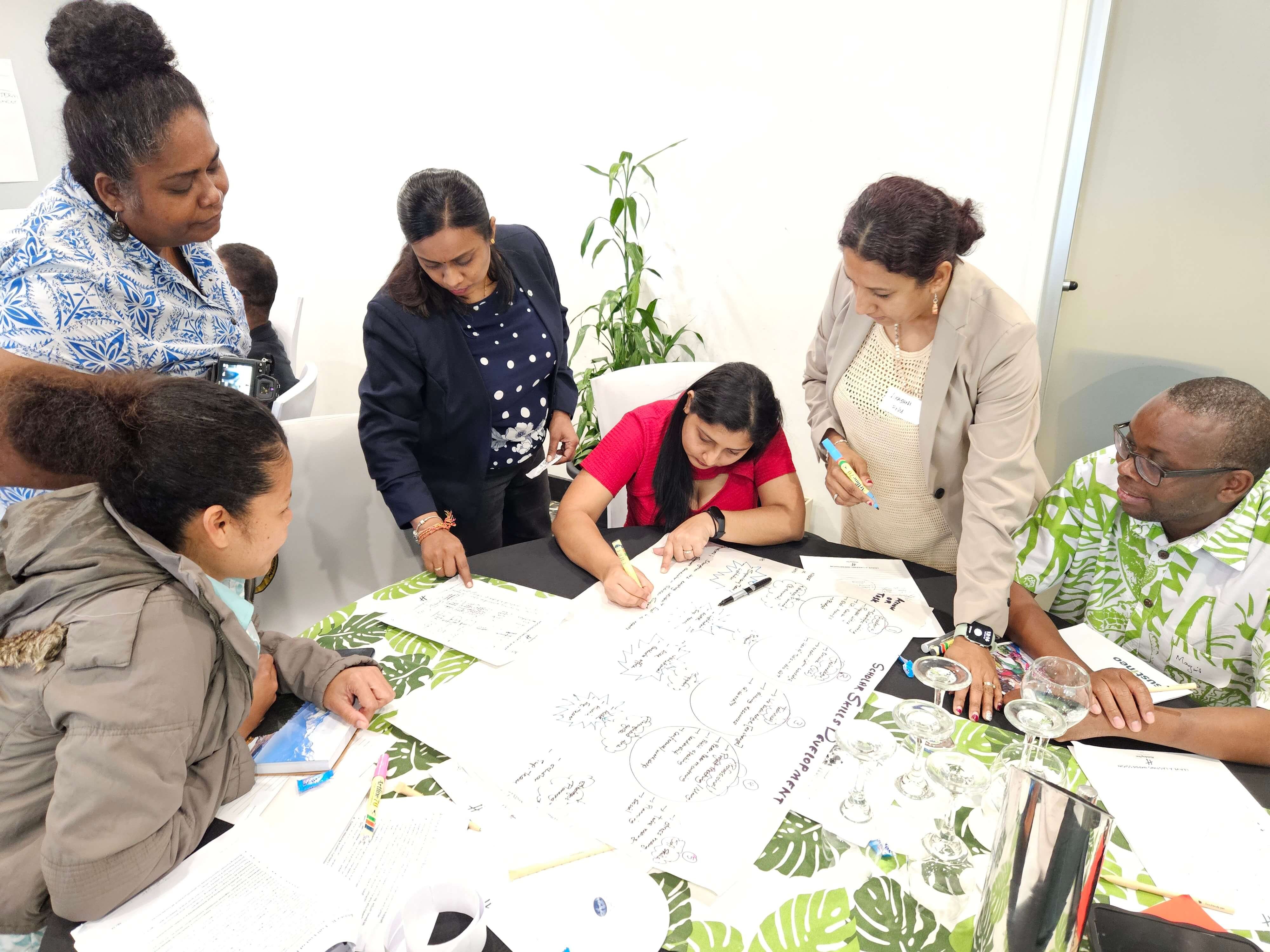
We combined data and people’s stories to get a complete picture of each sub-program’s impact. Our approach to each evaluation began with a careful review of program documents, past evaluations, and tracer studies to set the foundation. From there, our team carried out fieldwork across partner countries, speaking directly with scholars, alumni, universities, and government agencies through interviews and small group discussions. To broaden the evidence base, we also ran surveys that captured perspectives from a much wider group of stakeholders.
Our deep dives not only provided valuable insights but also led to practical recommendations to strengthen the programs and shape future initiatives.
Outcome
Each evaluation produced a set of clear and accessible outputs, from Aide Memoires and presentations of findings to DFAT and other stakeholders, through to publicly available formal Evaluation Reports. More importantly, the evaluations provided evidence-based insights that DFAT and its partners could act on straight away.
The findings helped strengthen the implementation of the Scholarships for each country, ensuring that student support, alumni engagement and partnerships with institutions remain responsive to local needs. They also highlighted ways the sub-programs could better align with Australia’s broader development and foreign policy priorities across the Asia–Pacific. By bringing together data, lived experiences and practical recommendations, our work supported DFAT to refine program delivery and maximise the long-term impact of the Australia Awards.