The challenge
Much of what is known or talked about regarding locally led approaches is driven by the Global North, such as in government guidance notes, think tank papers or academic journals. These may draw on the perspectives of locals, but the stories are often told from the perspective of the Global North.
So, what does a locally led story about ‘locally led’ look like?
Our approach
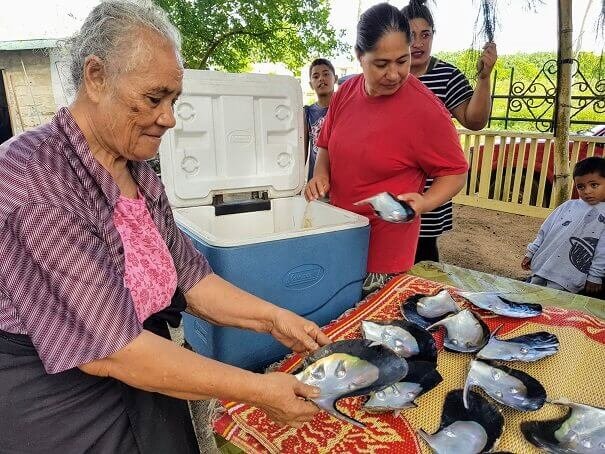
We worked with CARE Australia to gather stories, anecdotes and examples of ‘locally led’ in the Pacific. We went straight to the source, talking to organisations across the Pacific about what ‘locally led’ means to them. We wanted to find out about their lived experiences and how they wanted to lead and work in partnerships.
To be true to the concept of locally led, we used methods grounded in Pacific cultural traditions and ways of knowing. Not just a conversation, Talanoa and Fa’afaletui are indigenous methods for knowledge sharing and information gathering based on concepts of deep listening, storytelling and mutual respect.
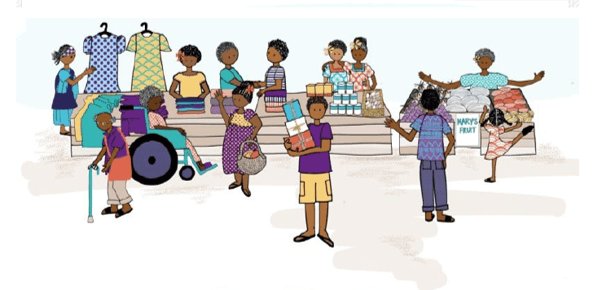
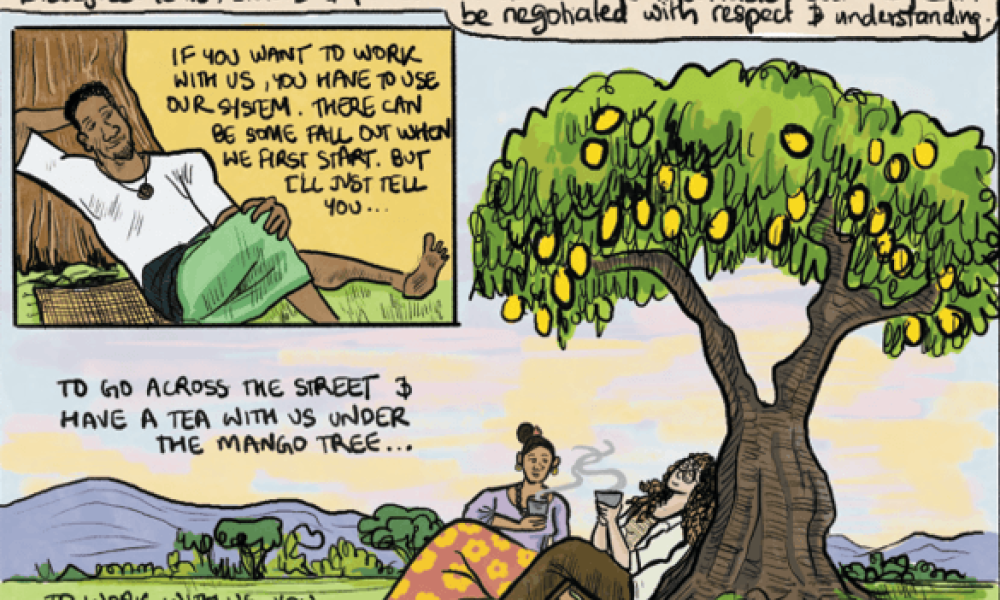
Once we gathered the stories, our illustrator (freelance cartoonist Rohit Rao) and in-house animator got to work. We used the symbolism and metaphors that the Pacific people we spoke with used to visually explain the concept of ‘locally led’. Our primary aim was to represent their voices as directly as possible—not filtered through our own analysis or perspectives.
Outcome
We uncovered a lot of nuances around the concept of ‘locally led’. The Pacific stories revealed it is often not about local organisations taking the lead on all aspects or a project or program. Instead, their view was that it is about working in partnerships with international organisations (like CARE Australia) plus the donors and governments at all levels.
Local Pacific organisations often have the authority to represent their communities, and true partnerships recognise and leverage that element of leadership, combining it with the strengths of others. There are a lot of stakeholders in the world of development, and everyone needs to play complementary roles to reach their goals together.
It was exciting that CARE Australia wanted more than a written report. We also produced a comic series and animation, both of which are outputs that really suit the topic and resonate with the Pacific organisations and other audiences. With this suite of products, we have equipped CARE Australia (and other organisations and donors) to talk about ‘locally led’ specifically from the perspectives of local partners and be more deliberate about pursuing shared visions of ‘locally led’.
More Sustineo projects
Unpacking the evidence on social protection in the Pacific and Timor-Leste