The challenge
Partnership is key to much of Australia’s international development work in the Pacific; however not all partnerships are created equal.
The Pacific Agriculture Scholarships and Support Program (PASS) provides postgraduate scholarships for Pacific scholars to study at Pacific universities rather than at Australian institutions, keeping them in the region as part of a strategy to build lasting regional capacity. PASS not only provides scholarships and student support but also supports partner universities (USP and more recently FNU) to deepen their capacities and expertise as research universities. However, there was a need for the design of the next phase of PASS to develop a stronger, more equitable three-way partnership to deepen local leadership of the program, ensure the Pacific universities have the opportunity to engage with each other as mutually supportive partners, acknowledge and support the increasing managerial capacity of the two universities, and ensure all partners’ needs are met.
Our approach
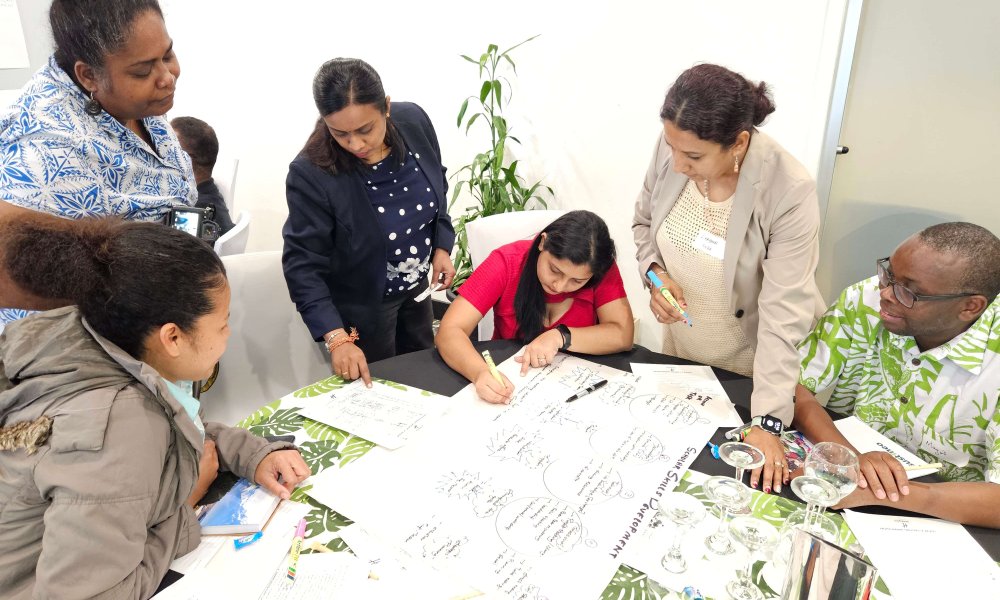
We undertook a co-design process with the three PASS partners (ACIAR, FNU and USP), emphasising the importance of participant-led design that incorporates the perspectives and experiences of a broad range of stakeholders. Involved in the process were PASS partner leadership, program staff, supervisors, scholars and alumni. Central to the process was a co-design workshop held in Suva, where all stakeholders worked together to develop a Program Logic, prioritise areas for change, brainstorm PASS activities, and co-create a timeline of key actions for the next phase of PASS. Through 29 key informant interviews, 26 participants in the 3-day workshop, and 10 post-workshop meetings with PASS partners to further develop ideas and designs, Sustineo was able to ensure that the design process was truly collaborative and representative of the capacity and priorities of the PASS community.
Outcome
At the end of this project, we delivered a series of ‘live’ documents to the PASS partners, meant to be used, tested, built upon and improved as they embarked on the next phase of the PASS program. These included a program logic, PASS design document, detailed activities within each component of the design, possible timeframes and stepped approaches to undertaking these activities, a proposed team structure, a draft budget, and a Monitoring, Evaluation and Learning Framework for the next phase of the program. It is essential to the ongoing success of the program that these documents are flexible and adaptive. We worked collaboratively with the partners to develop these plans and hand them over for their continued work, as the co-owners of PASS activities with a view to making them achievable and aligned with their shifting priorities and capacity over time.
A key element of our work was in supporting the partnership between PASS partners and providing opportunities for them to build trust and understanding. A successful PASS program will depend on the strength of the partnership, and by bringing together not just the leaders of each partner institution, but also staff, supervisors and students, we were able to facilitate this increased understanding and trust.
More Sustineo projects
Impact Assessment of giant clam research in the Indo-Pacific region

Listening, learning, adapting: our experience evaluating the Australia Awards