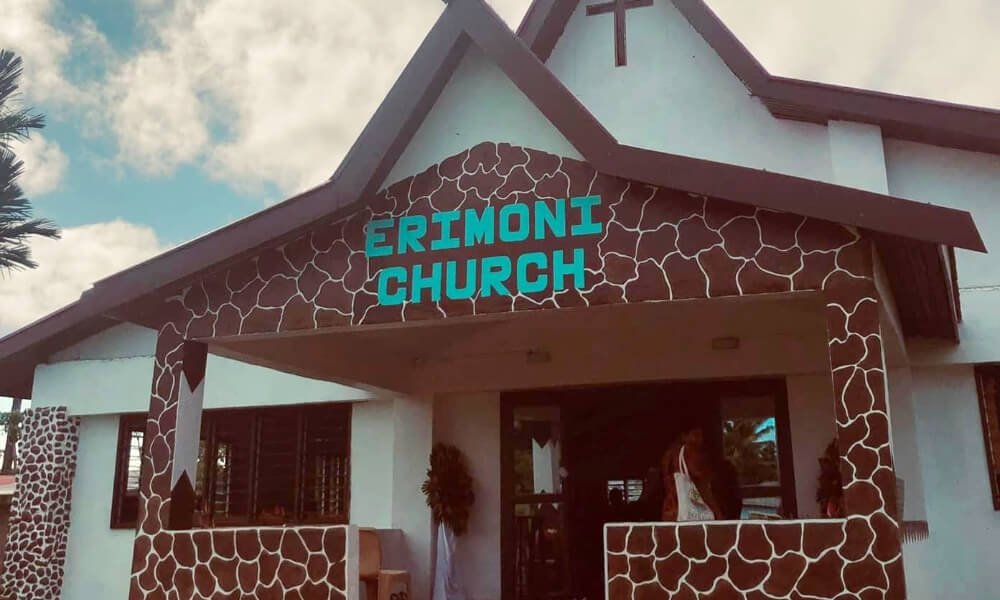
The challenge
However, some interpretations of Christian teachings, such as the idea that cyclones are divine punishment, can discourage disaster preparedness. The Theology of Disaster Resilience in a Changing Climate initiative seeks to apply a theology lens to show how Christian beliefs can actively support, rather than hinder, disaster preparedness. Seven years into implementation in Solomon Islands, Fiji, Papua New Guinea and Vanuatu, Sustineo was asked to review progress to date and help guide the initiative’s future.
Our approach
We combined rigorous evaluation standards with culturally grounded methods and, importantly, we used a strengths-based lens. Rather than hunt for faults, we asked what people valued, how relationships were changing and where theology had opened doors to action. Key to this was participatory dialogue. Our local teams leaned into Talanoa and Tok Stori methods to create space for open and respectful dialogue. Across 45 key informant interviews and 30 focus group discussions, we gave voice to church leaders, community members, government officials and implementing partners across the four countries. To complement these conversations, we ran a mini survey to capture perceptions from 54 stakeholders and reviewed programme records, financial data and prior research. Along the way, we tested our emerging findings in a virtual workshop with the initiative’s Review Committee before finalising our recommendations.
This blend of qualitative depth, quantitative insight and Pacific research ethics let us capture both the human stories and the systemic issues shaping the initiative’s journey.
Outcome
Assessed against relevance, effectiveness, efficiency and sustainability, our review presented a mixed picture. Relevance was strong: grounding disaster-risk messaging in theology helps reconcile faith with preparedness, counters beliefs that disasters are divine punishment, and improves engagement with training. The approach built capacity among faith-based civil society partners, strengthened inter-denominational relationships, and promoted inclusion of women, persons with disabilities and older people. Evidence of change was clearest among church leaders, some of whom were beginning to embed these messages in teaching and policy discussions.
Effectiveness at the community level was far less certain: rollout had been slow, observed behavioural change remained limited and uneven, and government uptake was weak. Efficiency constraints—thin budgets spread across multiple countries, heavy and sometimes unclear demands on country coordinators, partnership tensions (including with some National Councils of Churches), and materials that were still too technical or inaccessible—dampened progress and data quality. Monitoring and evaluation investments and skills were small relative to need and reporting leant toward inputs and activities rather than outcomes.
Sustainability of the initiative depends on strengthening partnerships (church and government), resourcing coordination, clarifying the impacts that matter and improving the evidence base so theological messaging can translate into demonstrable community resilience.
A stand-out moment came from clergy in Papua New Guinea, who reframed the biblical story of Cain and Abel to inspire disaster preparedness. The message, ‘I am my brother’s keeper’ turned a theological teaching into a practical call for responsibility and care. This approach, shared through TDRCC training, helped shift mindsets during times of misinformation and division, particularly during the COVID-19 vaccination push. It showed the strength of using familiar stories of family and custodianship to build resilience.