The challenge
Vanuatu is already experiencing significant impacts from climate change and disasters. But what happens when adaptation and disaster risk reduction can no longer prevent all the harm that communities face?
This is the difficult territory of Loss and Damage, encompassing not only economic losses to infrastructure, homes and livelihoods, but also losses that are much harder to quantify, such as cultural practices, ancestral places, traditional knowledge and connections to land.
Vanuatu has been at the forefront of international discussions on Loss and Damage and had already developed a national policy and roadmap. The next challenge was turning this emerging policy area into practical, long-term action.
Through technical assistance funded by the Santiago Network – the first of its kind in the world, the Government of Vanuatu sought support to develop a long-term Loss and Damage programme, identify the capacities and knowledge systems needed to deliver it, and prepare Vanuatu’s inaugural proposal to the new Fund for Responding to Loss and Damage.
Our approach
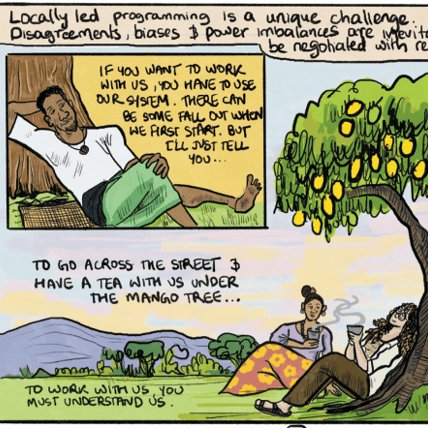
Sustineo worked as part of the Nabanga Loss and Damage Consortium, alongside Pacific Advisory, Santo Sunset Environmental Network and the Institute for Study and Development. The partnership brought together international technical expertise with strong Vanuatu-based knowledge, relationships and experience, making the work homegrown rather than imported from outside.
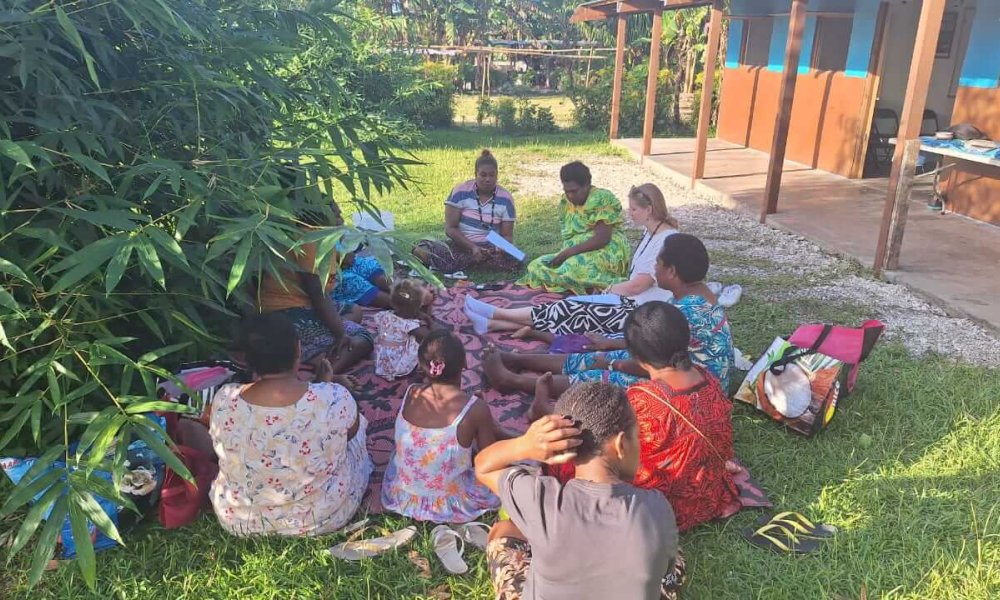
One of the project’s most innovative elements was a Storian methodology developed to support community-level visioning. Through multi-day conversations on Efate, Santo and Tanna, communities, NGOs and Area Administrators explored the climate-related losses they were already experiencing and imagined how these might change over the next 20 years. These conversations then moved towards practical questions: what could communities, governments and other partners do now to prepare for, minimise or respond to those losses?
The approach needed to create space for conversations about difficult issues – including threats to livelihoods, cultural practices and ancestral burial sites – while also maintaining a sense of agency and possibility.
These place-based insights were combined with national workshops, interviews and engagement across government, civil society and the private sector. Sustineo also led a capacity development and knowledge-brokering assessment, looking beyond physical investments to the people, institutions, relationships and knowledge systems that will be needed to sustain action over time.
Outcome
The project helped move Loss and Damage in Vanuatu from an emerging policy concept towards a more practical, whole-of-country agenda.
Together, the Consortium developed recommendations for a 15-year Loss and Damage Programme, supported the preparation of Vanuatu’s inaugural proposal to the Fund for Responding to Loss and Damage, and produced a Capacity Development and Knowledge Brokering Assessment and communications products capturing the visioning process.
Just as importantly, the process broadened the conversation about what responding to Loss and Damage can mean.
At community level, the Storians created opportunities to think beyond immediate climate and disaster impacts towards changes that may unfold over decades – including losses that cannot simply be rebuilt or replaced. At the national level, the work brought together perspectives from different ministries, sectors, civil society organisations, communities and businesses, helping position Loss and Damage as an issue that extends well beyond the climate sector alone.
The resulting programme therefore considers not only future investment priorities, but also how knowledge is shared, how local capabilities can be strengthened and how different parts of society can contribute.
For Sustineo, the project demonstrated the value of embracing complexity rather than simplifying it away. By combining local expertise, culturally grounded engagement and practical investment thinking, the partnership helped create a pathway for Vanuatu to continue leading on one of the most challenging climate issues facing countries today.
This helped ensure Vanuatu perspectives were embedded throughout the work, from community engagement through to national-level programme design. It also created opportunities to strengthen the experience and capability of local organisations working on Loss and Damage – an emerging area of practice not only in Vanuatu, but across the Pacific.