The challenge
Papua New Guinea is a nation rich in biodiversity and cultural heritage, with agriculture playing a crucial role in the livelihoods of its people. Most of the population relies on subsistence farming, making the agricultural sector vital for both food security and economic stability. These smallholder farmers with largely rain-fed agricultural systems are highly vulnerable to both climate variability change, leaving many farmers exposed to risks they cannot control.
Agroforestry (integrating trees and shrubs into farming areas) offers significant potential for carbon sequestration. By increasing tree cover, smallholder farmers can not only enhance their resilience to climate change but also contribute to global carbon mitigation efforts. However, unlocking the access to carbon markets for smallholder farmers remains challenging.
Our approach
Since 2018, we have partnered with the Institute for Climate, Energy and Disaster Solutions at the Australian National University and local stakeholders in Papua New Guinea on several research projects. These projects were all about finding practical adaptation and mitigation options for smallholder farmers that are tailored to Papua New Guinea’s unique challenges.
Our research has combined large-scale household surveys, in-depth interviews, and participatory approaches to ensure insights are both rigorous and relevant. For one project, titled Climate Smart Agriculture Opportunities for Enhanced Food Production in PNG, we looked at how seasonal climate information could better support farming decisions, such as what crops to plant and when. By integrating scientific forecasts with local knowledge, and mapping trust networks through a social network analysis, we identified the most effective facilitators, gatekeepers and communication hubs to share climate information with farmers.
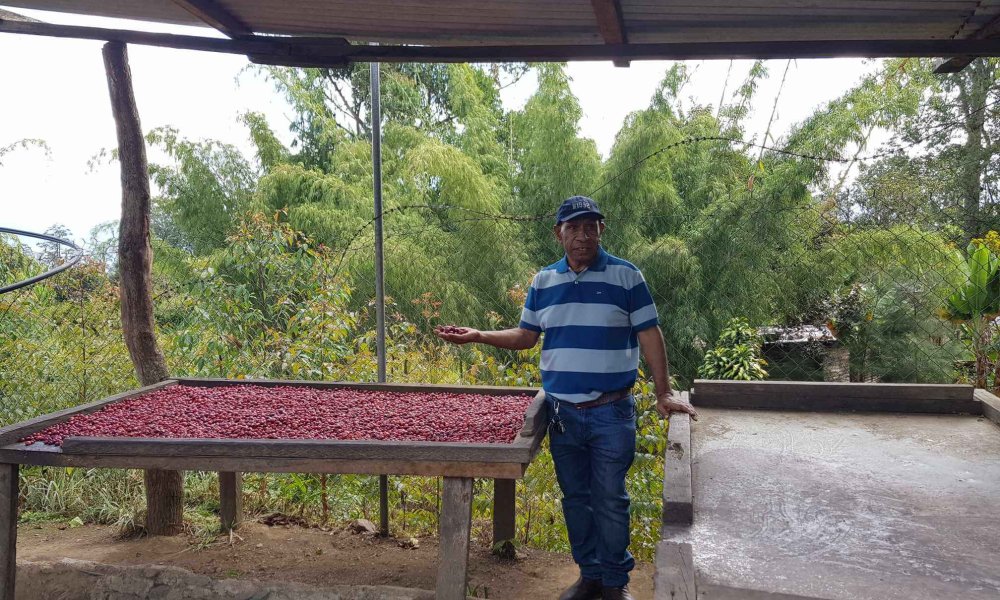
In another pioneering project, we investigated the potential of coffee-based agroforestry systems. We examined different land tenure models and their implications for smallholder participation in voluntary carbon markets, a space where PNG currently has no active agriculture projects. Through desk and field research, we generated place-based insights into what enabling conditions would allow smallholder farmers to engage in carbon-neutral certification.
Together, these projects show our commitment to evidence-based approaches, working in partnership, and navigating complexity to find practical, locally tailored solutions.
Outcome
Understanding and mapping the social benefits of agricultural practices is just as important as tracking environmental outcomes. By looking beyond adaptation and mitigation metrics, we’ve been able to put community wellbeing at the centre of climate strategies.
Our work in Papua New Guinea has highlighted the importance of supporting social and economic outcomes for smallholder farmers. For example, there’s a need to close gender gaps in access to climate information, and to use local governance structures and trusted information networks to share benefits and opportunities more fairly.
We created information products tailored specifically to Papua New Guinea’s farming contexts which supports more effective initiatives that directly benefit farmers in their everyday lives. These initiatives not only achieve climate goals but also promote broader development outcomes, ensuring that the benefits of projects are far-reaching and inclusive.
Farmers now post photos of their crops, swap tips, and learn from each other’s experiences. Research and extension staff can also spot real-time challenges and respond more effectively. The result is not just better information sharing, but stronger community bonds and more resilient farming practices.