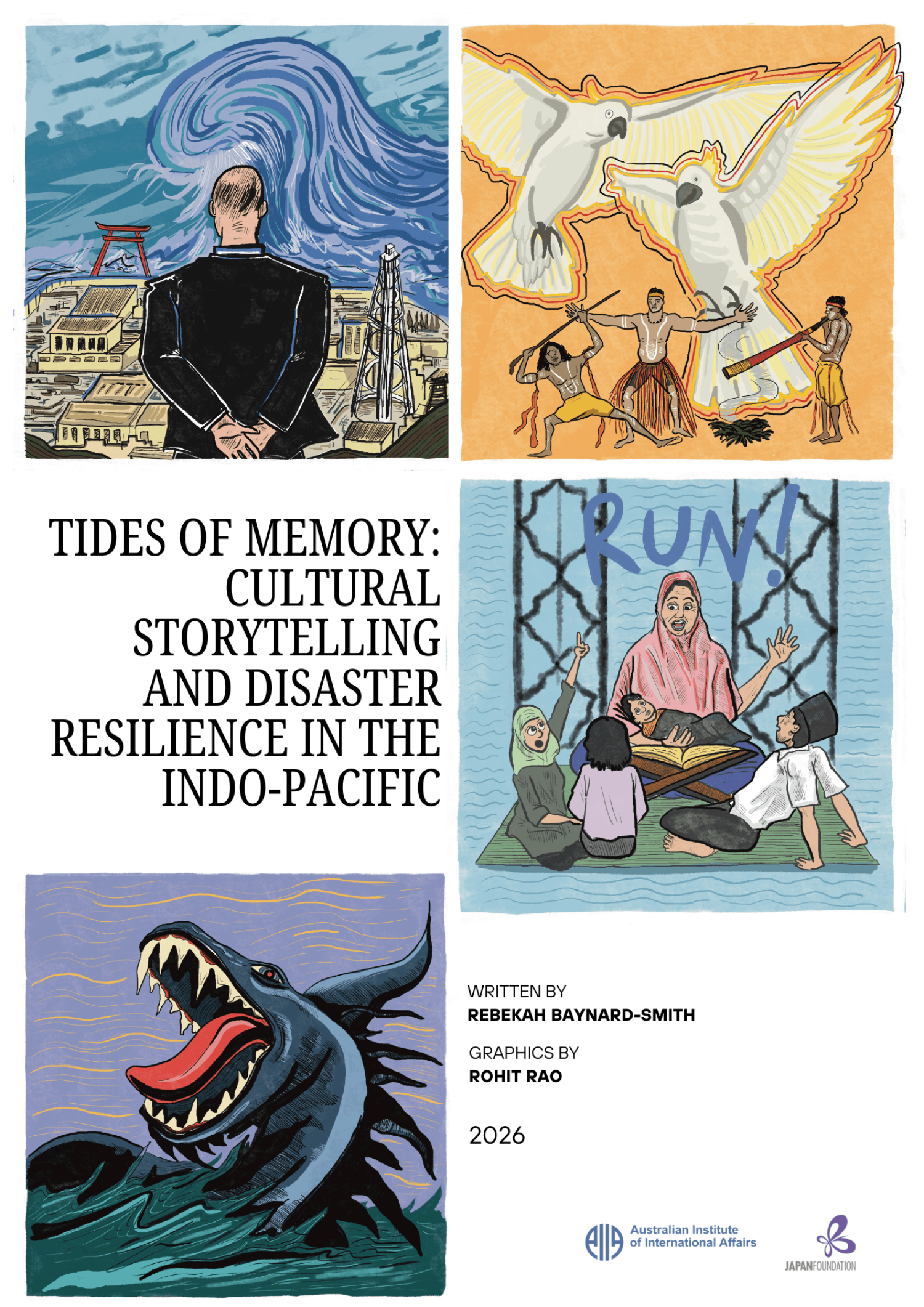
Senior Consultant Rebekah Baynard-Smith recently published a piece all about cultural storytelling and the role it can play in disaster resilience. Looking at case studies from around the Indo-Pacific, it’s clear that the way different cultures memorialise their disaster experience and share lessons to future generations through art, music, technology, stories and physical spaces plays a big part in building a culture of disaster preparedness. The case studies include:
- Japan’s disaster museums, memorials and shrines
- Indonesia’s smong tsunami stories on Simeulue island, Sumatra
- Yolngu cyclone songs and dances in Australia’s Arnhem Land
- Art and technology in storm and bushfire affected regions of Victoria (Australia)
- Māori taniwha worldview in New Zealand
What does this mean for us?
At Sustineo, we are proud of our focus on indigenous ways of knowing, research and what we can learn from other practices.
The case studies highlight how powerful local ways of knowing and engaging with local environments, people and situations are, and how they position us to tackle big problems like climate change and a future of increased and intensified disasters.
They highlight the importance of storytelling practices in cultures all over the world, and the different and diverse forms that they take. While we often talk about Talanoa and tok stori, there are other forms of sharing memories and lessons that look and feel a bit different, such as dances, community websites and wood carvings!
The case studies teach us that there is a way to integrate local and often longstanding practices with modern advances, ensuring practices are passed down to the next generation and not at odds with more conventional disaster preparedness, emergency management, planning and infrastructure development.
Finally, the examples remind us that people heal, remember, and learn in lots of ways. Whether through carving art onto felled tree trunks, engaging in indigenous supernatural worldviews, multi-generational storytelling, or immersing yourself in an earthquake diorama, these are all effective ways to engage people in important lessons of what has happened and, more importantly, what could happen again. There is much we can learn by understanding how different countries and cultures engage in this critical intersection of memory and resilience.
To download the report, visit the AIIA website here.
About the author: Rebekah is a Senior Consultant at Sustineo and a community development/disaster risk reduction practitioner. In 2024-2025, Rebekah was a Fellow of the Indo-Pacific Corporation Network, studying disaster resilience in Japan, Fiji, New Zealand and Australia.