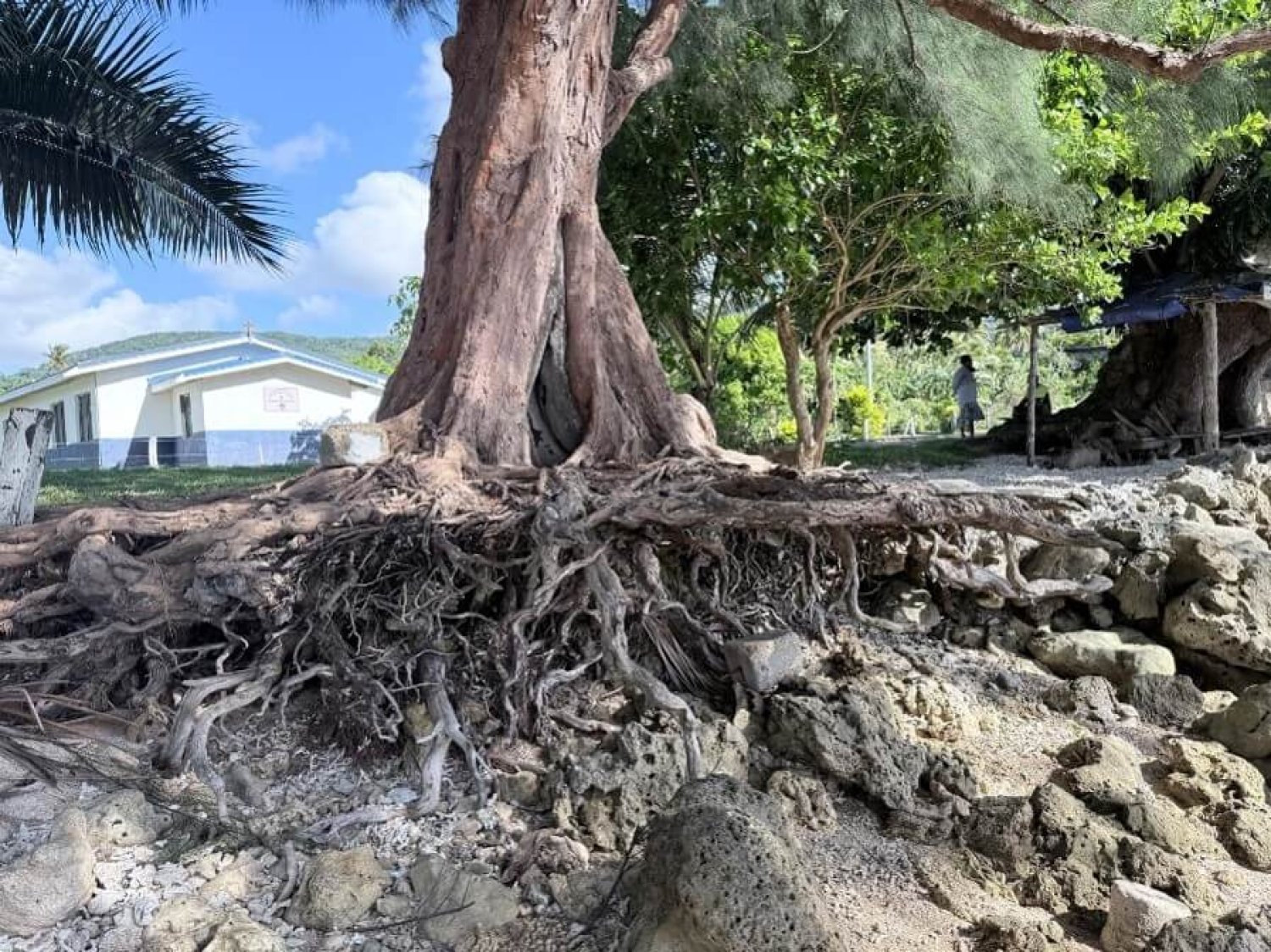
The people of Vanuatu are already living with the impacts of climate change. The country is facing Loss and Damage in much more than just infrastructure and economies, but also livelihoods, land, ecosystems, culture, identity, health and wellbeing.
Vanuatu is not at square one in dealing with this. The country already has significant strengths to draw on, including a dedicated Loss and Damage Policy, extensive disaster-response experience, established climate and disaster institutions, and strong regional and global leadership on climate justice.
Our work with the Nabanga Loss and Damage Consortium and Santiago Network sought to uncover more about where those strengths lie and what more is needed to enhance Vanuatu’s capacity in this area. We also focused on how knowledge is built and shared in the country across communities, NGOs, government and others.
Here is some of what we found:
Some of Vanuatu’s most important capacities and knowledge systems sit outside formal institutions. Chiefs, churches, women’s and youth networks, cultural fieldworkers and community organisations already play critical roles in sharing information, making decisions and responding to change. Responding to losses involving culture, ancestral land, sacred places, identity or displacement requires ways of working that are trusted and culturally grounded – not simply technical assessments or data driven approaches. Communities, government agencies, technical specialists, customary institutions, churches and international partners all hold different kinds of knowledge. The challenge is helping that knowledge move between people and institutions in forms they can actually use. In the Vanuatu context, that means thinking beyond reports and portals. National forums, peer-to-peer learning, internships, technical working groups and accessible knowledge platforms can all help, but trusted relationships and people who can translate between different knowledge systems may be just as important.
Capacity development needs to mean more than training workshops. Vanuatu will need long-term investment in people, institutions and systems – including tertiary education, vocational pathways, scholarships, exchanges and opportunities for ni-Vanuatu professionals to build practical experience.
Important systems need strengthening. Loss and Damage needs to be better embedded in policies, legislation, sector plans, budgets and operating procedures – from social protection and planned relocation through to agriculture, health, infrastructure, finance, land and culture.
Accessing Loss and Damage finance is only part of the challenge. Vanuatu will also need the capability to develop proposals, manage investments, coordinate different sources of finance, demonstrate accountability and learn from what works.
Balancing the technical with the human is an art. Data analysis, modelling and valuation will be important, but so will facilitation, negotiation, cultural competency, mental health first aid and psychosocial support. Conversations about losing land, livelihoods, culture or home cannot be approached as purely technical exercises.
Loss and Damage also requires a shift from responding to disasters to planning for longer-term change. This means strengthening strategic thinking, experimentation, monitoring and adaptive management – and supporting ni-Vanuatu professionals who can connect community realities with national policy and investment decisions.
There are skills in Vanuatu that could be better recognised and mobilised. Returned seasonal workers, for example, may bring valuable experience in agriculture, commercial farming, business, livelihoods and disaster resilience that could contribute to future food security and livelihood initiatives.
One of the strongest opportunities is to combine traditional and technical knowledge rather than treating them as separate systems. Vanuatu’s response can build on both sophisticated technical expertise and longstanding customary approaches to knowledge, decision-making and resilience.
The assessment points towards a long-term approach: invest in systems and skills alongside tangible Loss and Damage projects, embed learning and knowledge sharing into investments from the outset, and strengthen capacity at national, provincial and community levels. Practical steps for embedding capacity development and knowledge brokering into the big picture response to Loss and Damage has been captured in a 15-year Long-term Programme developed by the Consortium as part of our work with the Government of Vanuatu and the Santiago Network. Stay tuned for more on that!
Ultimately, Loss and Damage is not only a climate-finance or technical challenge. It is a human, cultural and development challenge. People, place, culture and lived experience remain central to understanding and acting on Loss and Damage.
To learn more, read the brief here.